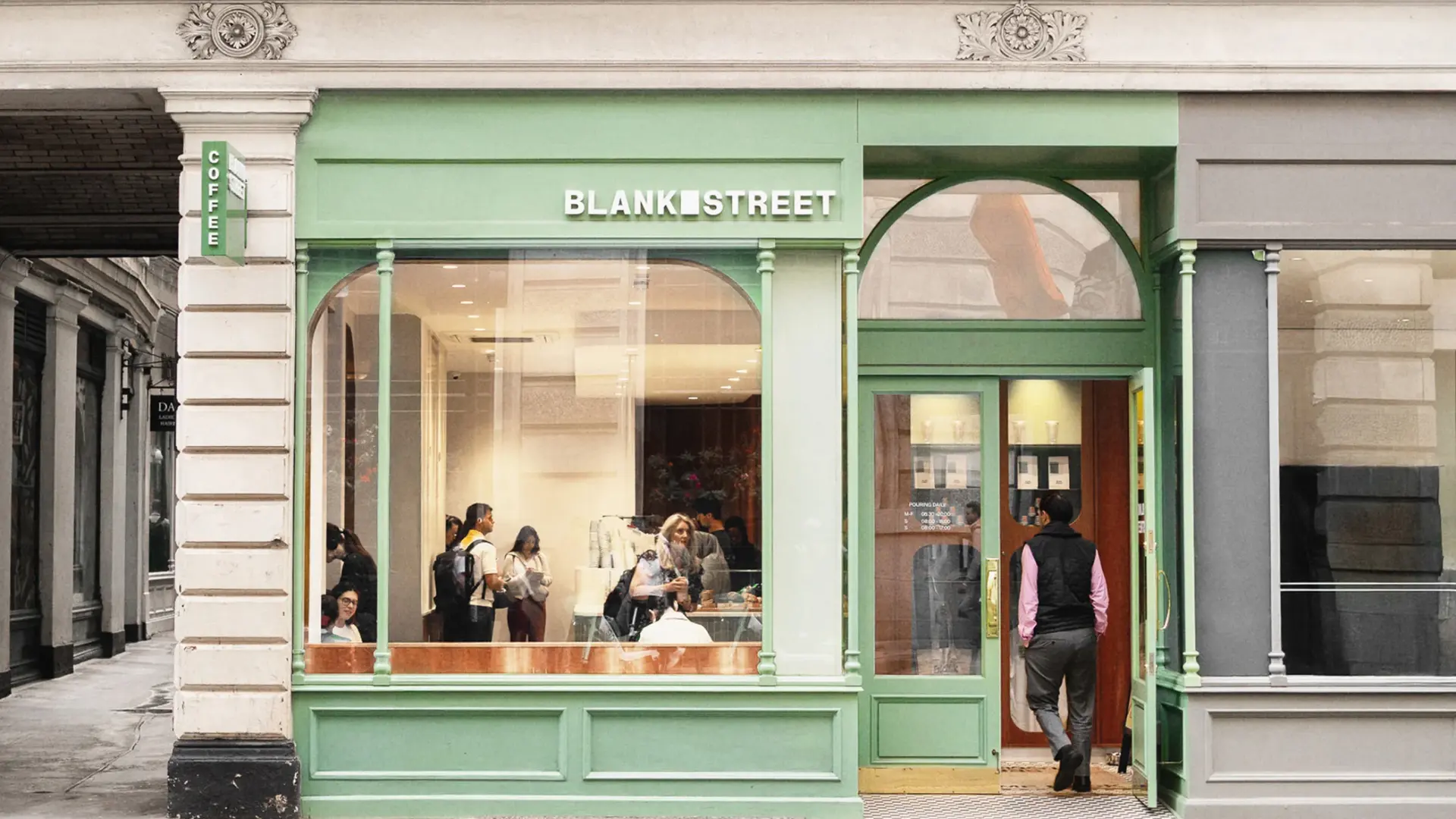
Los Angeles does not need another pre-batched matcha spot, and that is the slightly awkward greeting awaiting Blank Street Coffee, the pale-green, venture-backed coffee company that spent the last six years multiplying across New York, London, and other major cities before finally arriving on the West Coast.
Blank Street opened its first Los Angeles location in Studio City on August 12 and plans additional shops in Beverly Hills, West Hollywood, and Malibu. The company now has more than 100 locations globally.
L.A. is already deep in its matcha-snob era.
Blank Street's genius is taking whatever people want right now, whether that's matcha, seasonal flavors, cold drinks, or buzzy collaborations, and making it easy to get again and again. The experience is supposed to be consistent. You know what the drink will taste like, you can get it quickly, and the next Blank Street should feel familiar.
That's a very different proposition from the side of L.A. matcha culture that has gotten increasingly obsessive about the product itself. People will drive across town for a specific drink. Shops talk about sourcing, preparation, and tasting notes.
Some customers care about whether the matcha is whisked properly, where it was grown, or what gets added to it. The L.A. Times has even described “destination drinks” as a particularly strong L.A. phenomenon: drinks interesting enough that people will go out of their way for them.
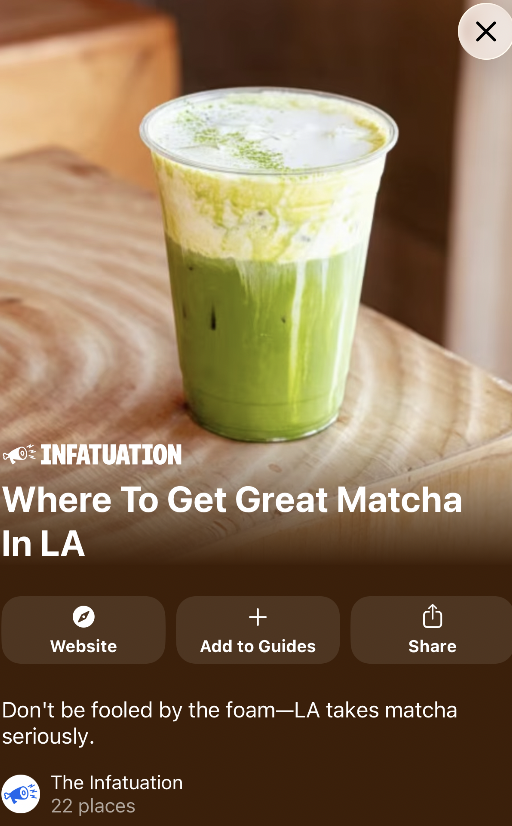
The takeaway is that Angelenos take matcha seriously. They even have their own Infatuation guide on Apple Maps covering the best matcha spots. Spoiler alert: none of them are chains.
So L.A. hates coffee and matcha chains? Not exactly.
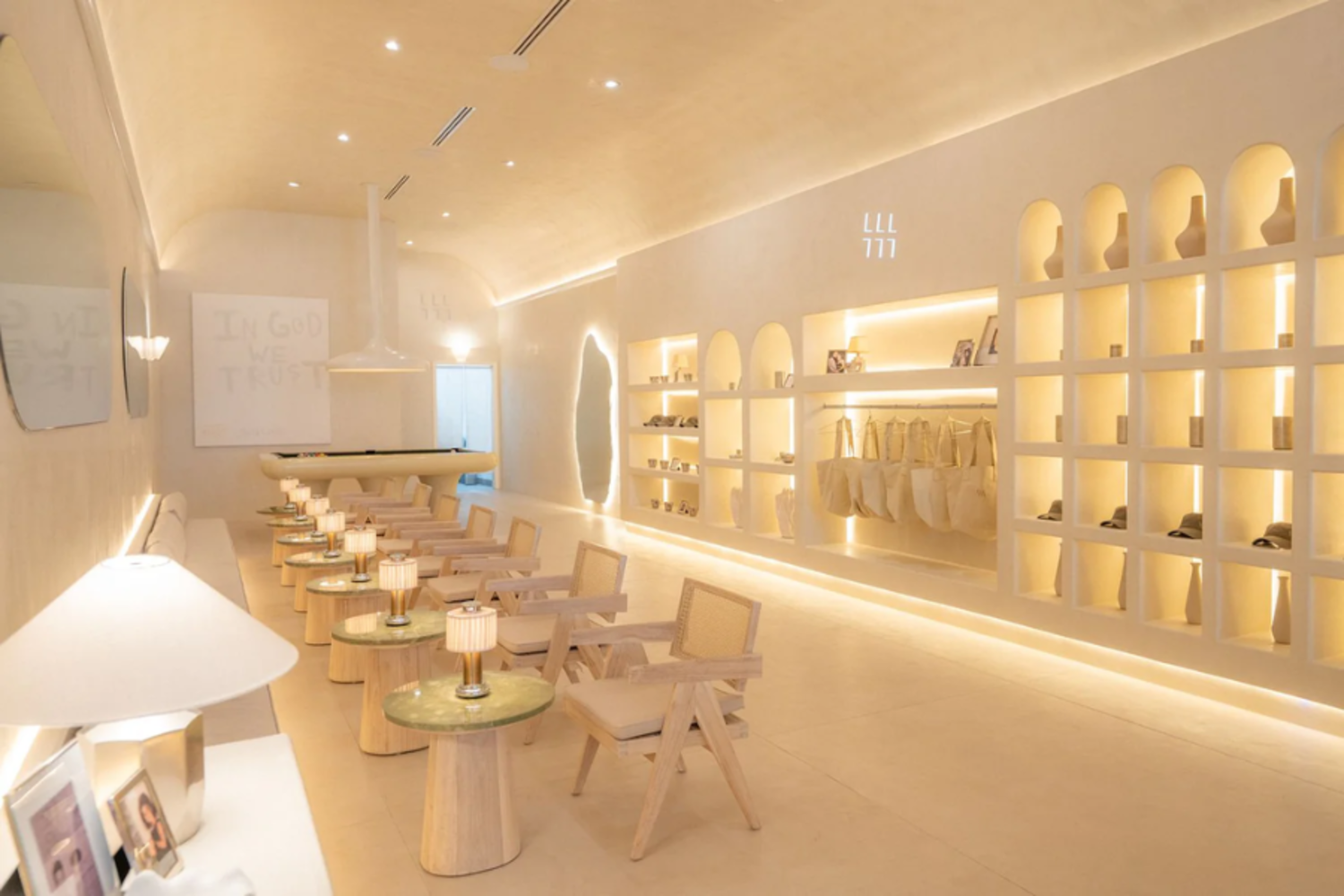
Some people will point to La La Land and say: isn't that also a chain that came into L.A. from somewhere else?
It is. La La Land started in Dallas in 2019 and expanded into Los Angeles in 2021. Today it has grown well beyond Texas and California.
But La La Land feels different here because it fits into an existing L.A. lifestyle almost suspiciously well.
The bright yellow cups, the aggressively upbeat staff, the whole “normalize kindness” thing; it is earnest in a way that could be annoying, but in L.A. it works. It's their vibe. The brand has also wrapped itself in the same wellness-fashion-entertainment universe people here already live in, with collaborations spanning lululemon, BÉIS, Nike, Vans, Disney, and MALK.
That makes it feel less like a chain that parachuted into L.A. and more like a brand that already spoke the language of Angelenos.
Blank Street speaks a different one. Maybe it's Bostonian?
Its model was built around speed, consistency, and volume, all things people on the East Coast deem necessary. Automated espresso machines, drinks assembled in roughly two and a half minutes, small footprints, app ordering, and a product that can be recreated across New York, Boston, and now Los Angeles. Blank Street's own CEO has described the original goal as occupying the space between high-end specialty coffee and traditional chains: not necessarily the best cup you've ever had, but a reliably good one you can drink every day.
That feels very East Coast, not as a criticism, just as a different consumer proposition. You are walking somewhere. You have ten minutes. Starbucks is right there, but Blank Street is cooler, the drinks are more interesting, it's almost as fast, and you think it's a better-quality drink. In a place like Boston or New York, I can immediately understand why that trade-up works.
L.A. is tougher because consumers are not exactly choosing between Blank Street and Starbucks.
There is La La Land. There is Coffee Bean. There is Peet's. There is Erewhon. Then there is the seemingly endless layer of neighborhood shops and small local chains: Rok, Community Goods, Series A, and enough new shops to last a lifetime of trying matcha.
The market is not underserved. It is almost comically overserved.
Blank Street is like the Glossier for cafés. The aesthetic can only get you so far before people catch on to the quality of the product.
Its first Studio City location has already drawn long lines, and the company is clearly betting that speed will be a competitive advantage in a city where popular cafés can come with serious waits.
Some unsolicited advice for the Blank Street team: the L.A. location could have been more integrated into the culture here. Think a Blank Street Reserve-style café or Blank Street Haus with hand-whisked matchas, cold foam, a special L.A. Einspänner matcha, or a collaboration with an L.A. brand.
While tourists or people visiting on business may flock to L.A.'s new Blank Street because they want quick and reliable, I see a challenge for Blank Street in capturing the Los Angeles community who know the city and love a good matcha or coffee.
And in a city with no shortage of amazing-quality coffee or matcha, that difference might matter more than how many locations you have.